Home Robots Face the Router Treatment. Will Acquisitions Be the Way In?
What the FCC did to routers is about to happen to home robots.

This is an editorial. The views and opinions expressed are those of the writer and reflect an interpretation of available FCC actions and industry developments.
The FCC’s new restrictions on foreign-produced robots have created plenty of uncertainty around robot vacuums and robotic lawn mowers, but we may already have a pretty good preview of what happens next.
Routers Are the Warning
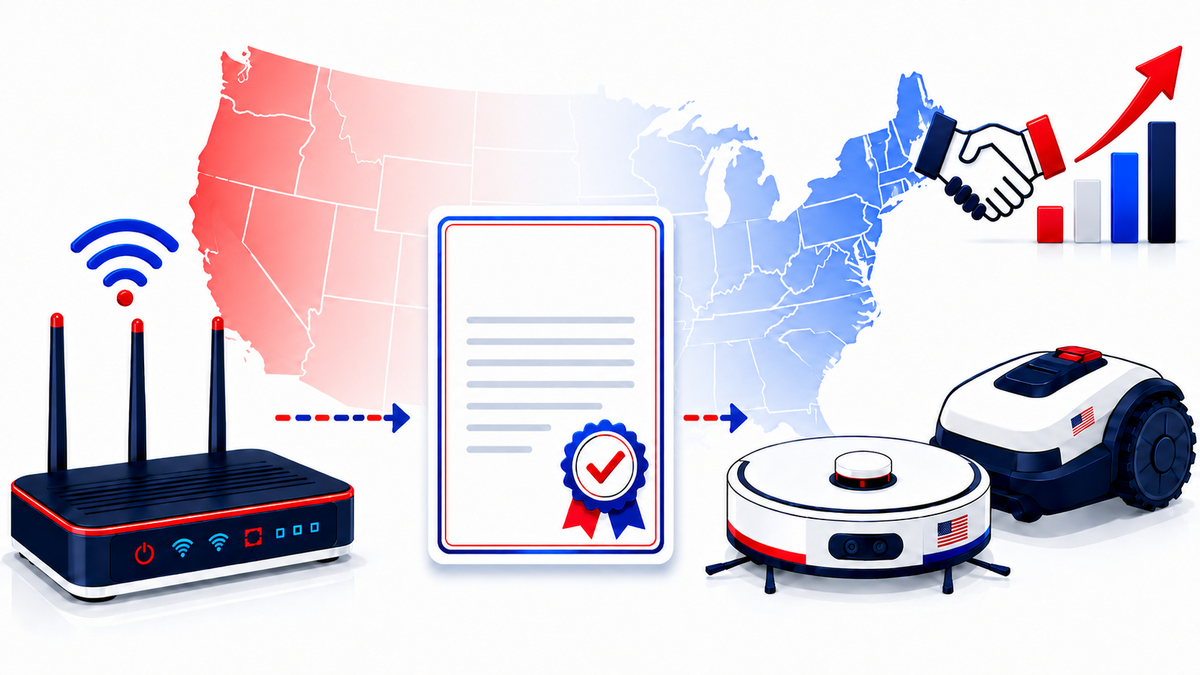
The FCC added foreign-produced consumer routers to its Covered List on March 23, 2026, effectively preventing new models from receiving the equipment authorizations needed to enter the U.S. market unless they receive conditional approval. The robot restrictions announced July 28, 2026, use essentially the same playbook.
U.S.-based Netgear received conditional approval for a large portion of its Nighthawk and Orbi lineup less than a month after the router restrictions took effect. Amazon-owned eero followed shortly afterward with approvals for its eero lineup and Amazon Leo routers, while SpaceX became a third U.S.-based company to receive clearance for certain foreign-made Starlink routers.
The situation looks very different for TP-Link, the dominant consumer brand that was spun off from a Chinese company and has a major U.S. retail presence, with data putting its share of the consumer router market above 20%.
Its next-generation products have not received approval, effectively freezing its U.S. product pipeline while its competitors have been able to secure conditional approvals.
Technically, this isn't simply an exemption for American companies. The router rule applies based on where products are produced, regardless of the manufacturer’s nationality, and applicants have to provide the FCC with information about their supply chains and plans for U.S. manufacturing.
But it's hard not to notice which companies have been able to navigate the process. Askey, a Taiwan-based networking company owned by Asus, is a particularly interesting example.
Its products are foreign-produced under the same FCC rules that have frozen TP-Link's pipeline, yet Askey received conditional approval for consumer routers U.S. internet providers supply to subscribers
While there are legitimate security questions surrounding network-connected devices, the router market shows how these rules can quickly become part of something much larger.
Home Robots Are Next
The FCC's July 28, 2026 action, generally prevents new foreign-produced advanced robotic devices from receiving equipment authorization unless they qualify under domestic-production rules or receive conditional approval. Existing devices are safe, for now.
For companies such as Roborock, Dreame, Mammotion, Ecovacs, Segway Navimow and Narwal, the biggest question may no longer be suction power, obstacle avoidance or slope rating. It may simply be whether their next products can launch in the U.S. at all.
DJI shows just how far this regulatory approach can go. The Chinese drone giant has faced years of scrutiny by U.S. lawmakers, and its new drones have been effectively banned. For now, its older models are still available for sale.
That may not last. The FCC opened a proceeding on July 21, 2026, that could prohibit the continued importation and sale of certain previously authorized foreign drones and components.
FCC approval, it turns out, may not be permanent.
The Acquisition Math Changes
Smaller foreign home robotics companies with interesting technology but limited U.S. brand recognition could suddenly become acquisition targets.
U.S.-based companies such as Toro, John Deere, Stanley Black & Decker or SharkNinja may prefer to acquire technology, intellectual property and established product lines from these companies rather than spend years developing competing platforms from scratch.
New U.S. subsidiaries or partnerships may offer another route, particularly if larger foreign home robotics companies decide that maintaining access to the U.S. market is important enough to require a more substantial domestic presence rather than just exporting finished products.
A New Era of Home Robotics
Some companies will pull out entirely. Some will find an American partner to sell through. Some will simply get bought. And a lucky few will get conditional government approvals.
Whichever path they choose, the FCC's rule changes will reshape the U.S. market for years to come.
But if the bot sitting on your floor right now belongs to a company in the first group, "still supported" is likely a phrase with an expiration date on it.