Maintenance Check: Freo 20
A complete Narwal Freo 20 maintenance guide, organized by how often each task needs doing, from daily roller checks to monthly filter and sensor care.

Narwal Freo 20 at a Glance (MSRP $1,099.99)
- Suction Power: 31,000 Pa
- Mopping System: FlowWash real-time mop wash, 140°F water, 16 nozzles
- Dock Mop Wash: Up to 212°F hot-water wash
- Dock Drying: 140°F hot-air drying
- Auto-Empty Bag: 2.4 L, up to 120 days
- Navigation: Dual RGB cameras, AI obstacle avoidance, 300+ objects recognized
- Noise Level: 56.9 dB(A) in Quiet Mode
- Robot Size: 13.8 × 14.3 × 3.7 in
- Dock Size: 17.0 × 15.8 × 18.1 in
As an Amazon Associate, VacuBots earns from qualifying purchases. We also earn commissions from qualifying purchases through other retailer links.
Main Roller, Side Brush and Wheels (Every 2–3 Days)
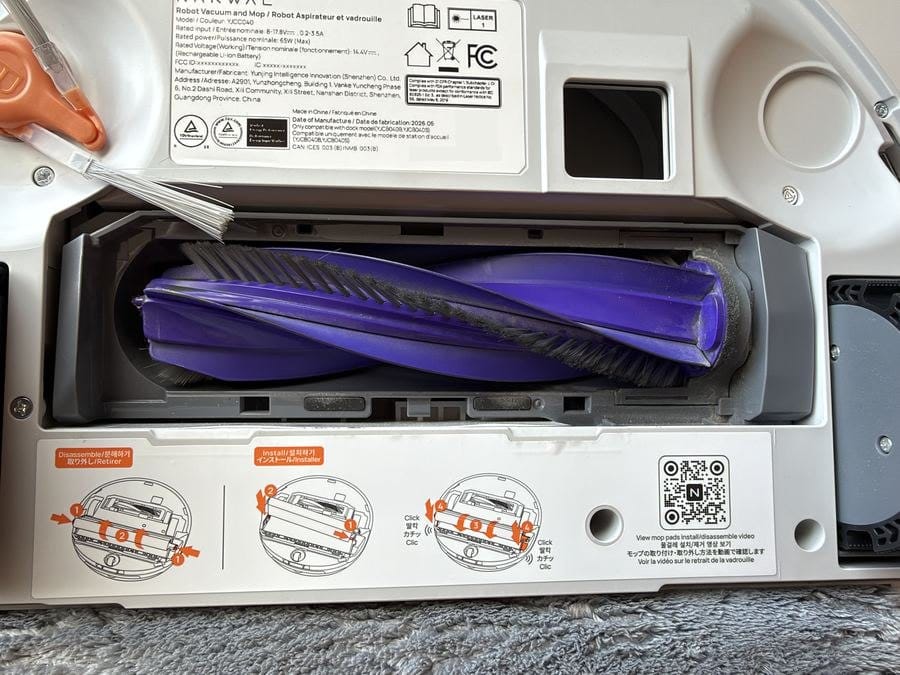
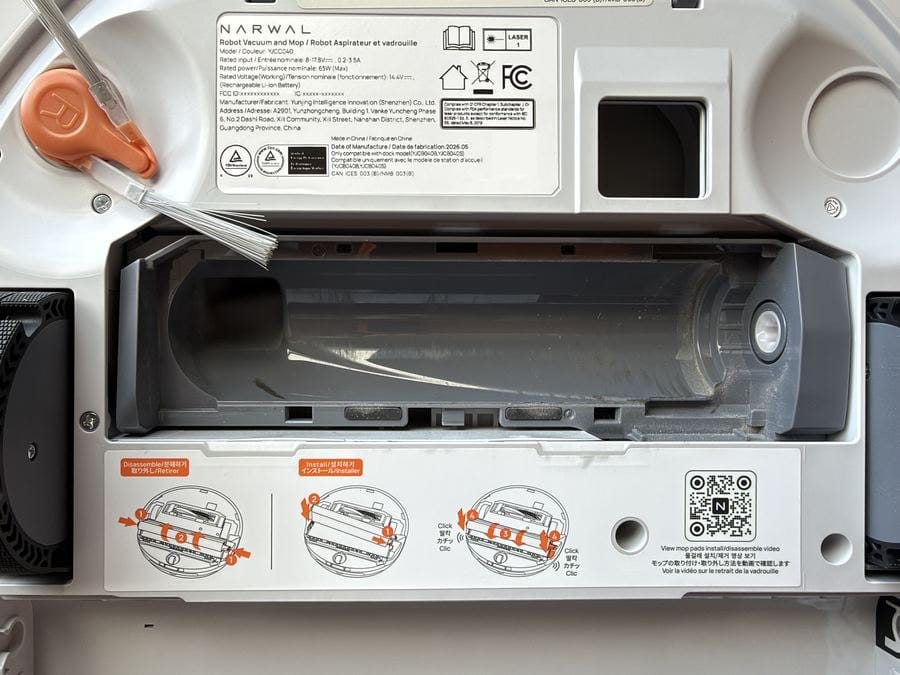
Main Roller and Brush Compartment
Remove hair and debris. Check more often if you use vacuum-and-mop mode frequently.
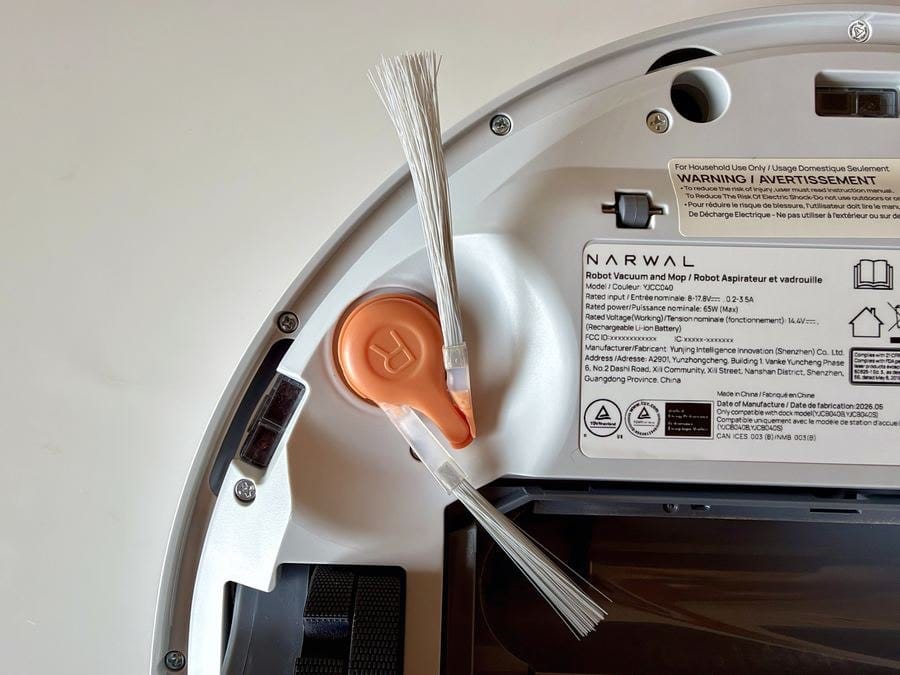
Side Brush Gear
Clear wrapped hair and strands from the side brush gear housing.
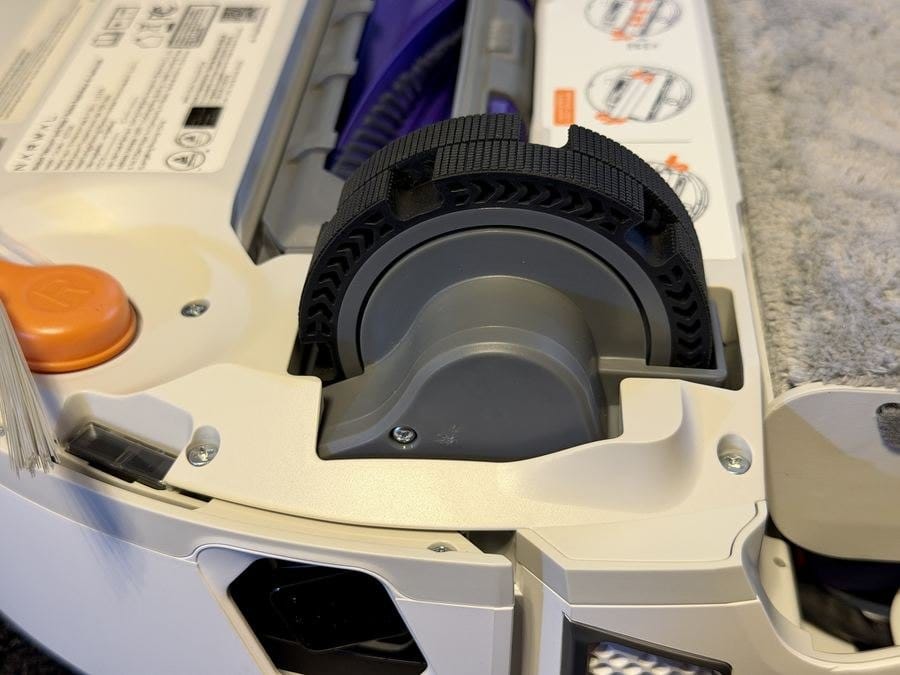
Wheels
Clear hair and debris that have wound around the axles.
Water Tanks, Dustbin and Filters (Weekly)
Dirty-Water Tank
Empty and clean to remove residue and prevent odors. Dish soap works for a deeper clean.
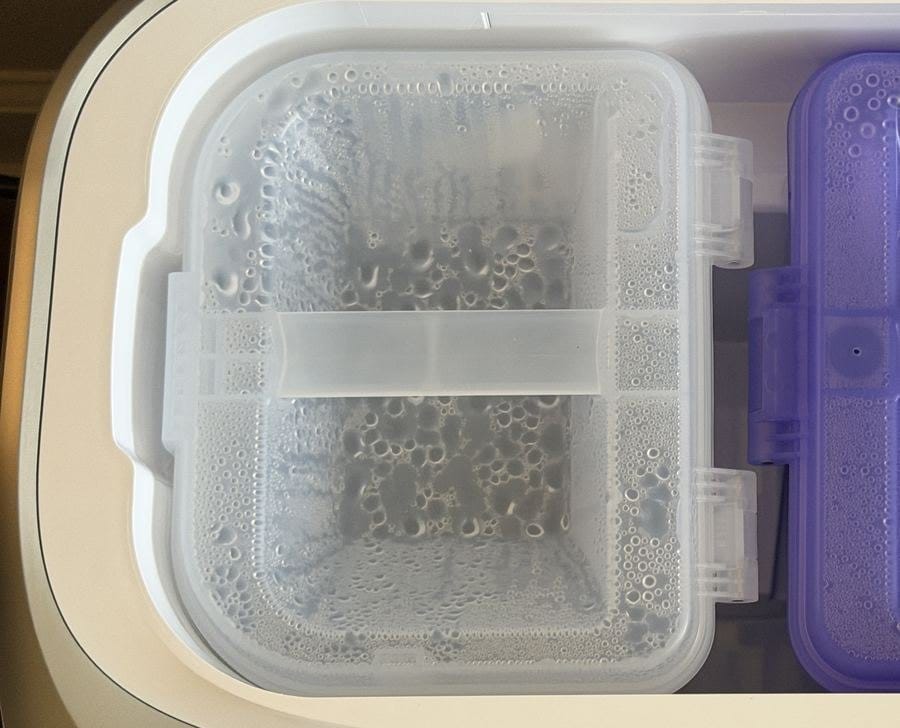
Clean-Water Tank
Rinse as needed. Remove the scale inhibitor first if using soap. Upon refill, Narwal cleaning solution should be used as directed.
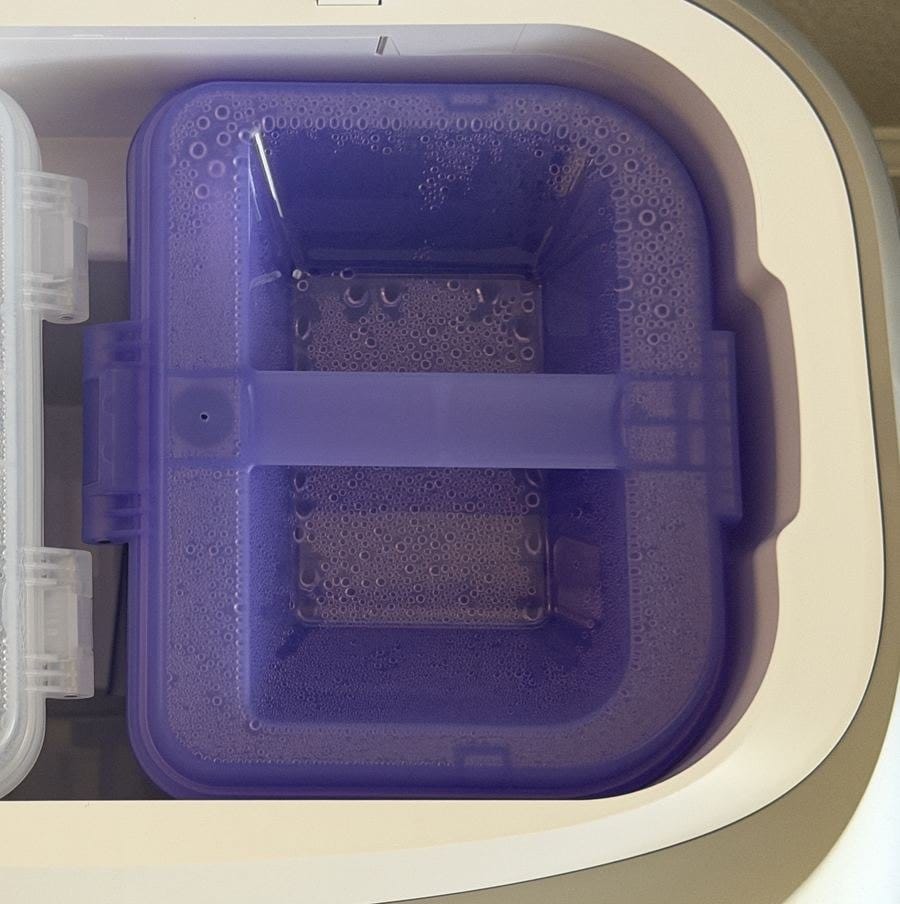
Dustbin
Empty and wipe out collected dust.
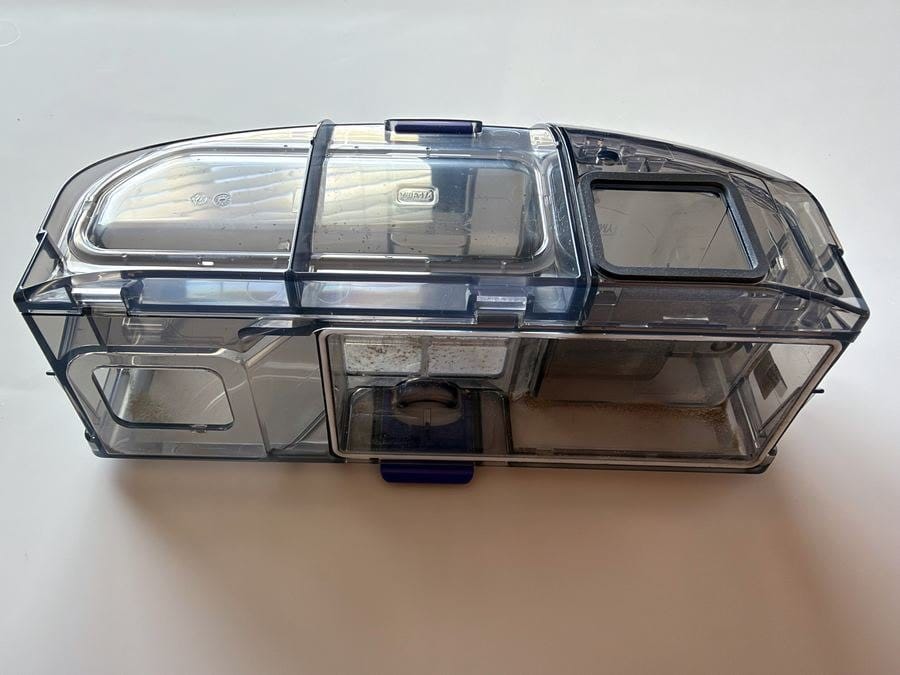
Underneath Dustbin Area
Make sure the intake port and suction grid are clear of hair, dust and debris.
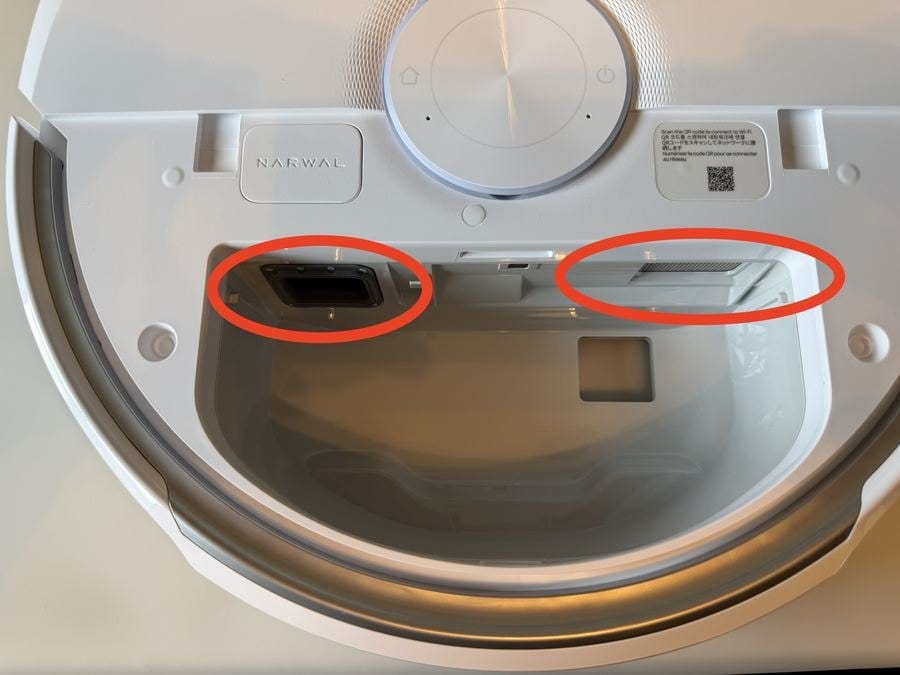
Main Filter
Clear dust from the filter with a handheld blower to maintain airflow.
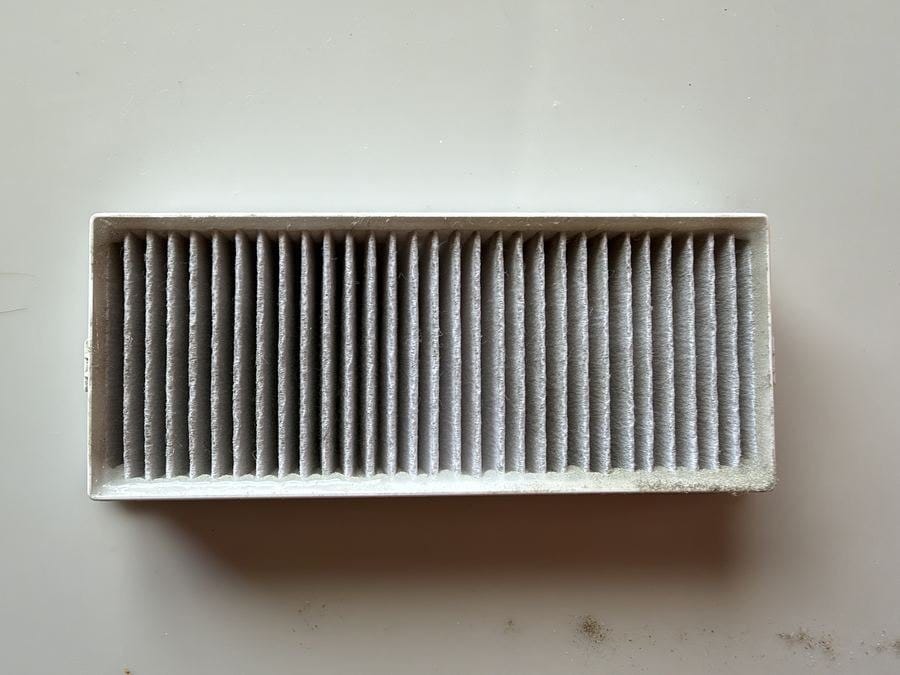
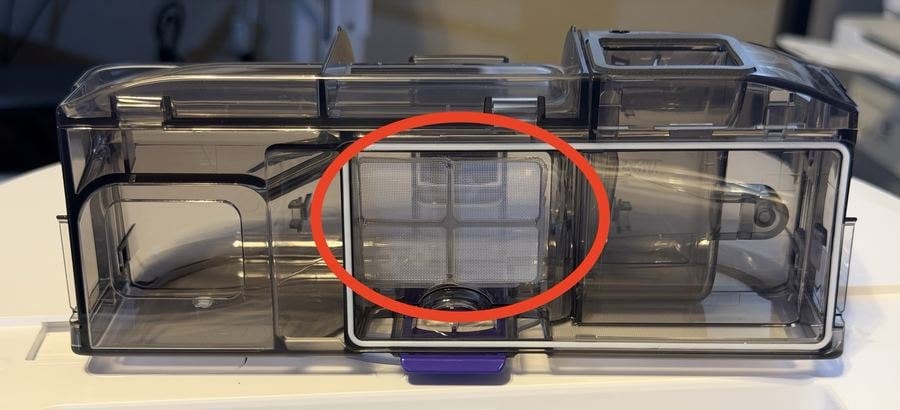
Prescreen Filter
Check closely. This one clogs with fine debris the fastest.
Sensors, Dock, Mop Pad and Dust Bag (Monthly)
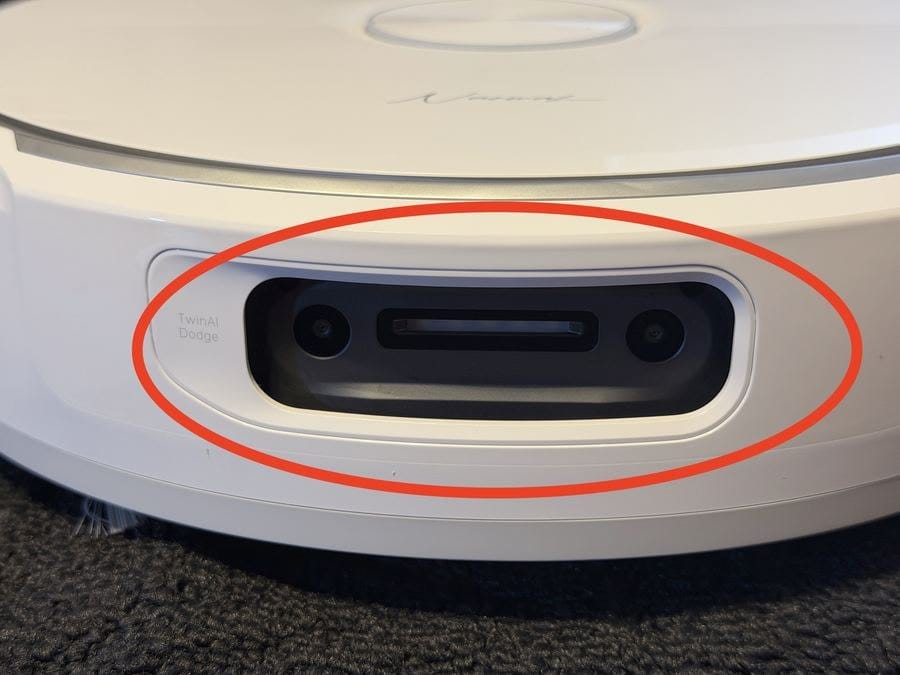
Top Sensors
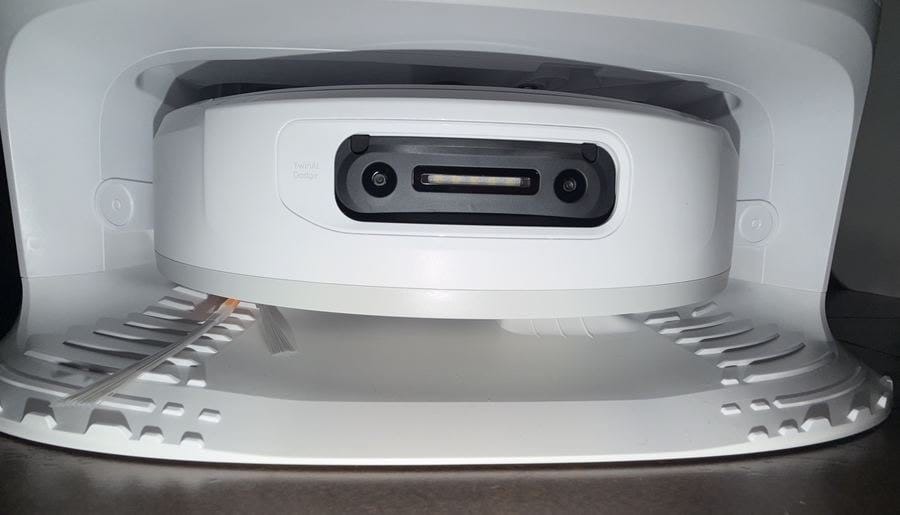
Wipe clean whenever dust or debris is visible. The front camera sensors handle obstacle avoidance, and the side sensor measures distance.
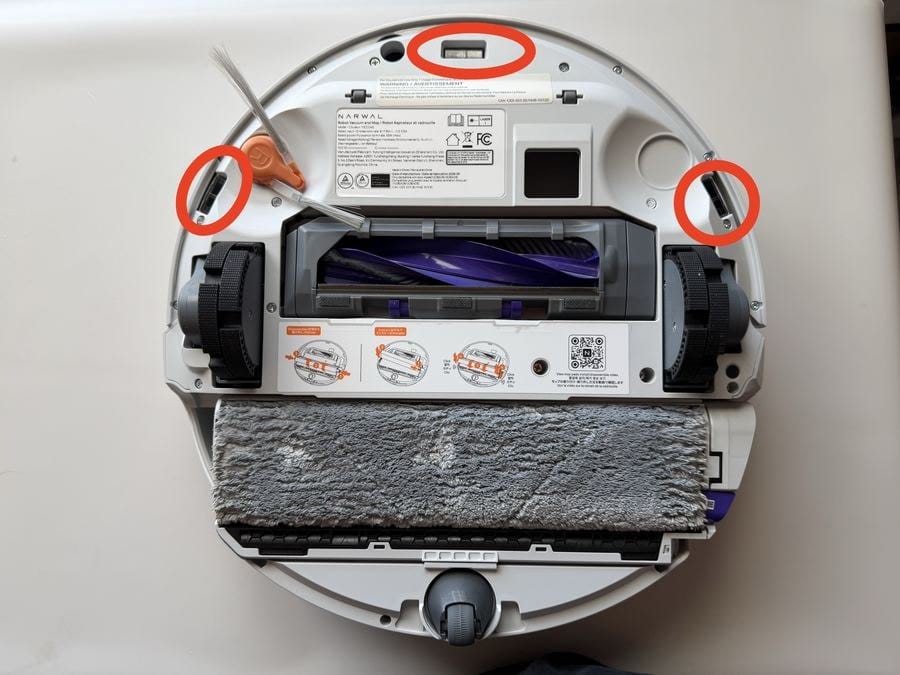
Bottom Sensors
These are the fall sensors. Wipe clean whenever dust or debris is visible.
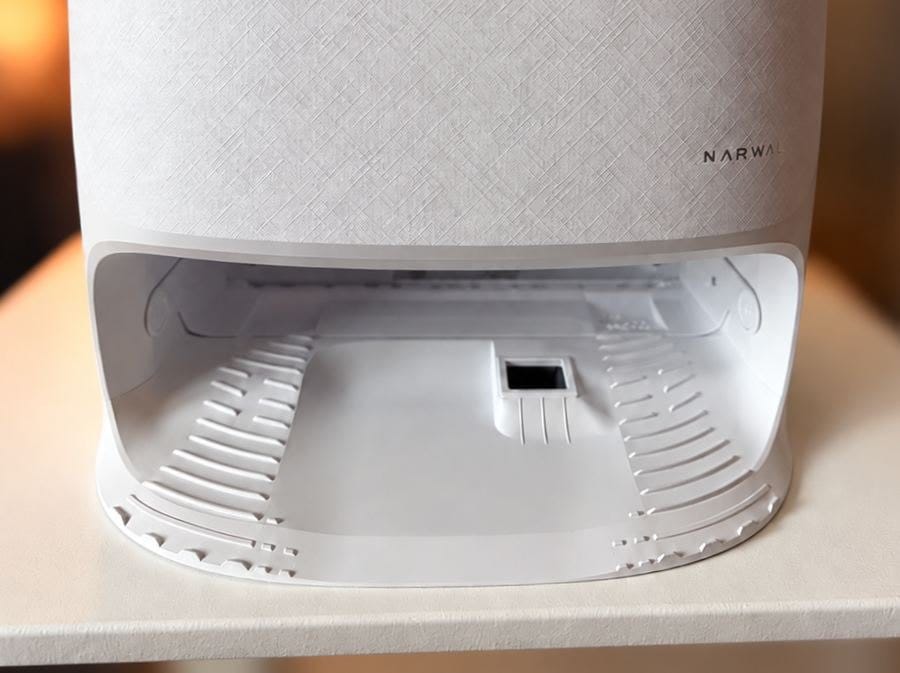
Washboard and Dock Basin
Give both a more thorough clean. Loosen dried residue with a little hot water before scrubbing.
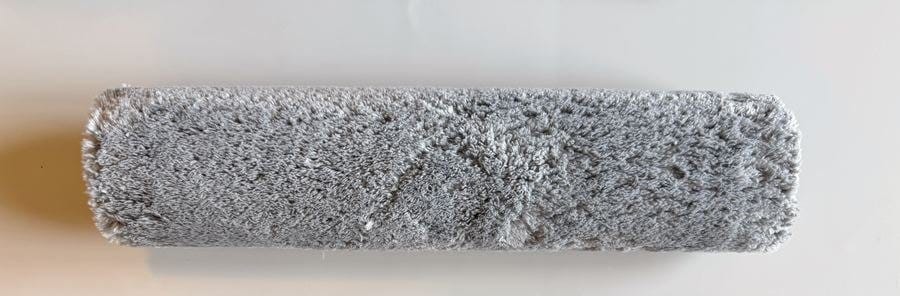
Mop Pad
Inspect the track mop for wear and replace it if needed.
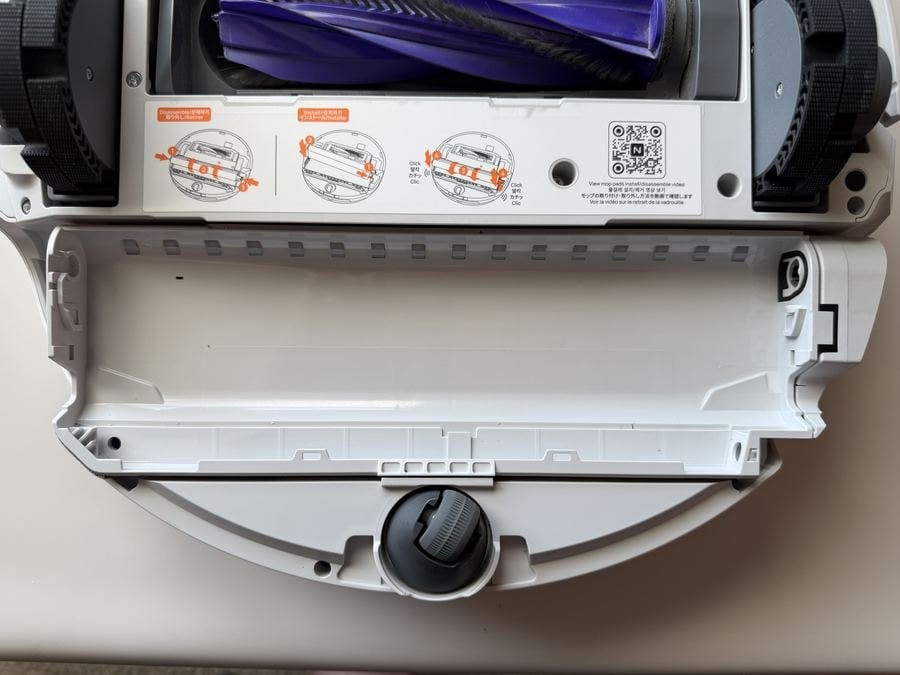
Track Mop Housing
Check the area for dirt, debris and residue.
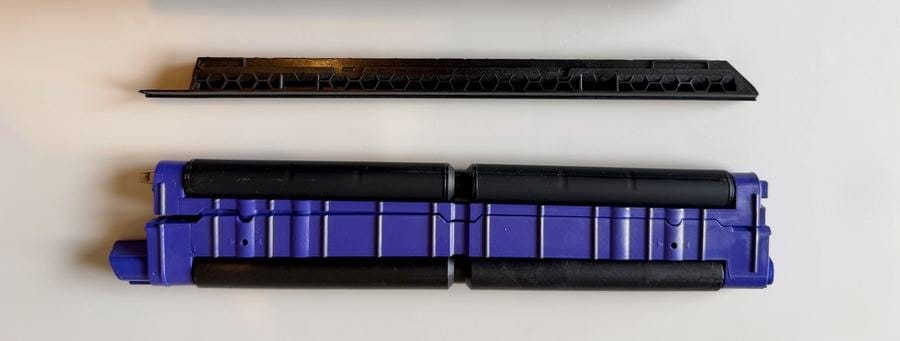
Scraper and Mop Roller
Check for dirt, hair or residue that could interfere with the roller-cleaning system.
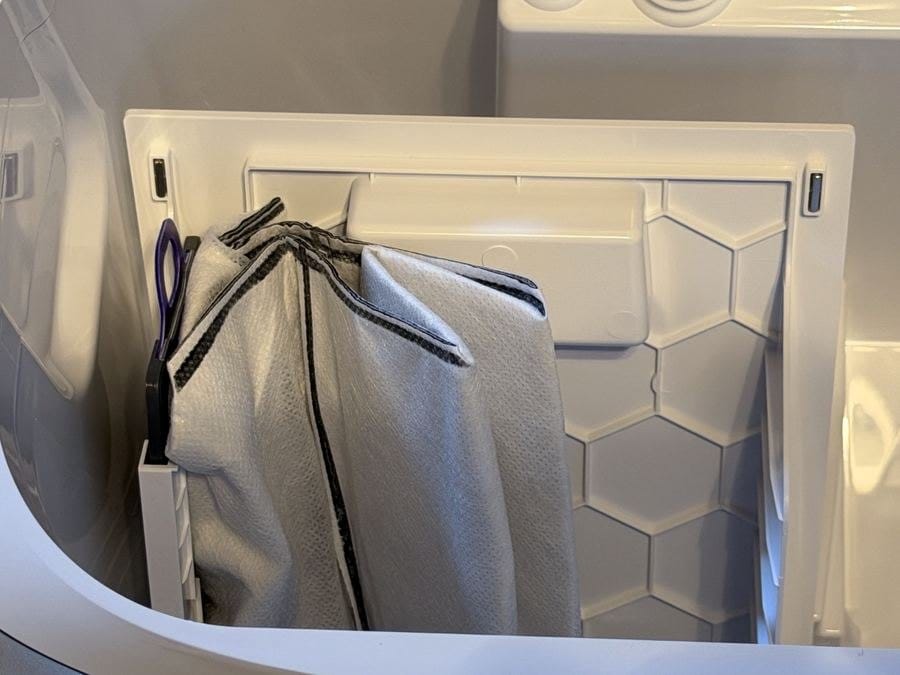
Dust Bag
Confirm the dust bag is seated correctly and isn't full. Gently shake it to settle debris.
Deep Clean (Every 1–3 Months)
Roller Compartment
Watch for dark, damp residue if you mop often. Let it fully dry between uses to avoid mold.
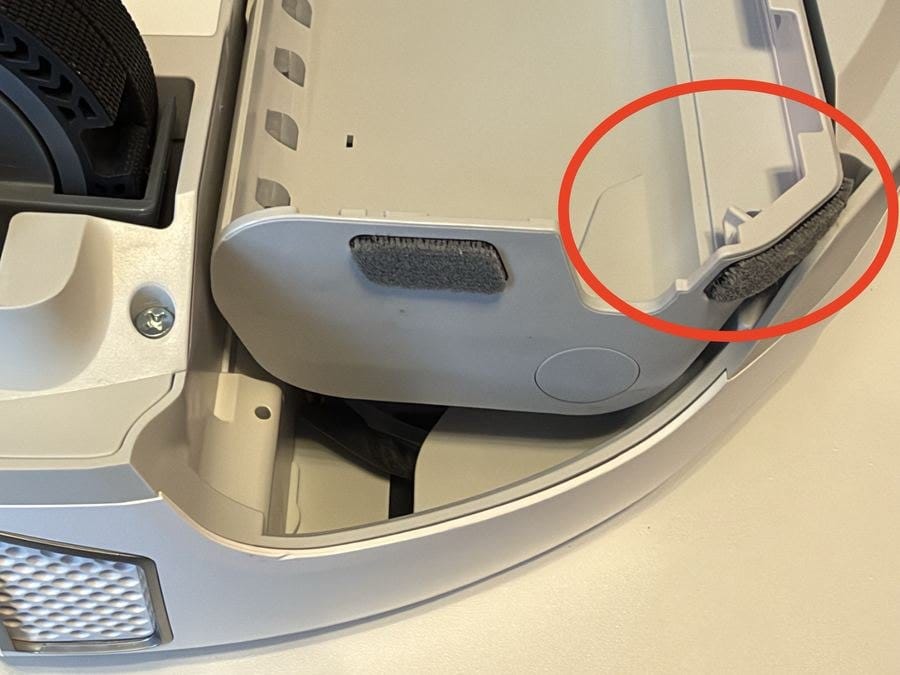
Track Mop Housing Corner
Wipe out the corner where the mop-roller track meets the housing.
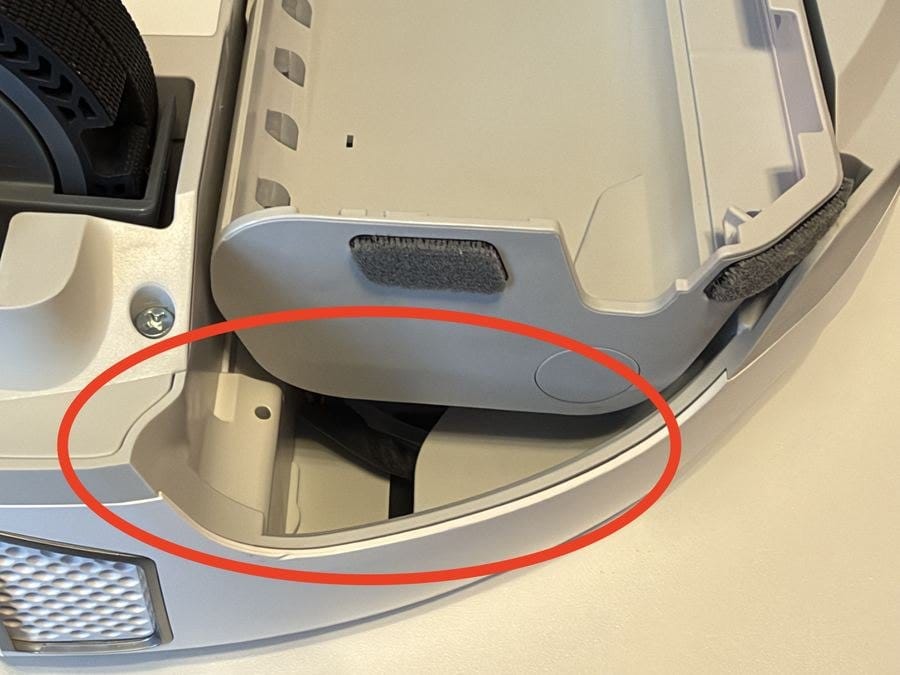
Area Under the Track System
This open space is easy to miss but collects dirt readily.
Drain Area
With the washboard removed, clear hair, lint or dried mud from around the drain.
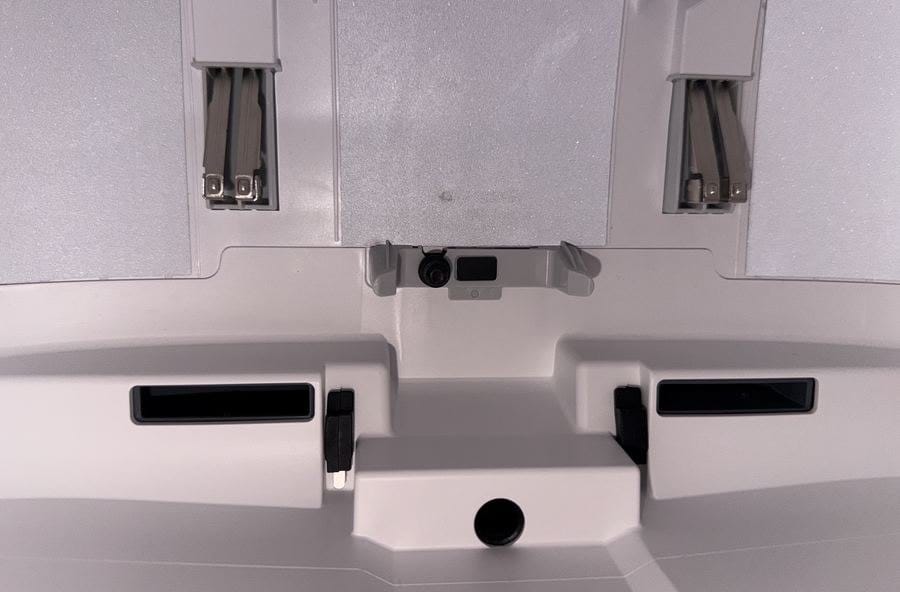
Dock Ramp
Wipe down the ramp's ridges and grooves so the robot docks smoothly.