Roborock Saros 20 First Look: More Power, Better Climbing and a Few Trade-Offs
The Roborock Saros 20 brings major upgrades to threshold handling, obstacle avoidance and dock cleaning, but our first runs found mixed vacuuming performance.

The Roborock Saros 20 is the company's latest flagship robot vacuum with dual spinning mops, combining a low-profile design with improved threshold handling, upgraded obstacle avoidance and a more capable dock.
After unboxing the Saros 20 and putting it through its initial cleaning runs, build quality, navigation and software made a strong impression. Vacuuming performance was more mixed.
Key Upgrades
The biggest changes focus on threshold handling and obstacle avoidance.
The Saros 20 adds new climbing wheels that help lift the robot over taller transitions. It can cross a single threshold up to 1.57 inches high or a two-tier threshold totaling up to 3.46 inches.
We have not yet had a chance to evaluate the Saros 20's threshold-climbing performance, so those figures are based on manufacturer specifications.
Roborock says the Saros 20 can recognize more than 300 types of obstacles, up from 108 on the Saros 10R. Both use the StarSight system with 3D sensing, a front camera and lateral obstacle detection, but the Saros 20 expands the recognition library nearly threefold.
Other upgrades are more incremental.
Suction increases from 22,000 Pa on the Saros 10R to 36,000 Pa on the Saros 20, while the dual spinning mop system applies 8N of downward pressure during normal cleaning and can increase to as much as 13N for deeper stain cleaning.
The dock also gets hotter mop washing, reaching as much as 212 degrees F, while heated-air drying reaches 131 degrees F.
One Step Back
The side brush is one notable downgrade.
The Saros 20 keeps the extendable FlexiArm design, but unlike the Saros 10R, the brush no longer lifts when the robot encounters a wet stain.
Unboxing and Build Quality
The Saros 20 has the solid build expected from a flagship robot vacuum.
The plastic feels thick and sturdy, the water tanks fit tightly and both the robot and dock feel well built.
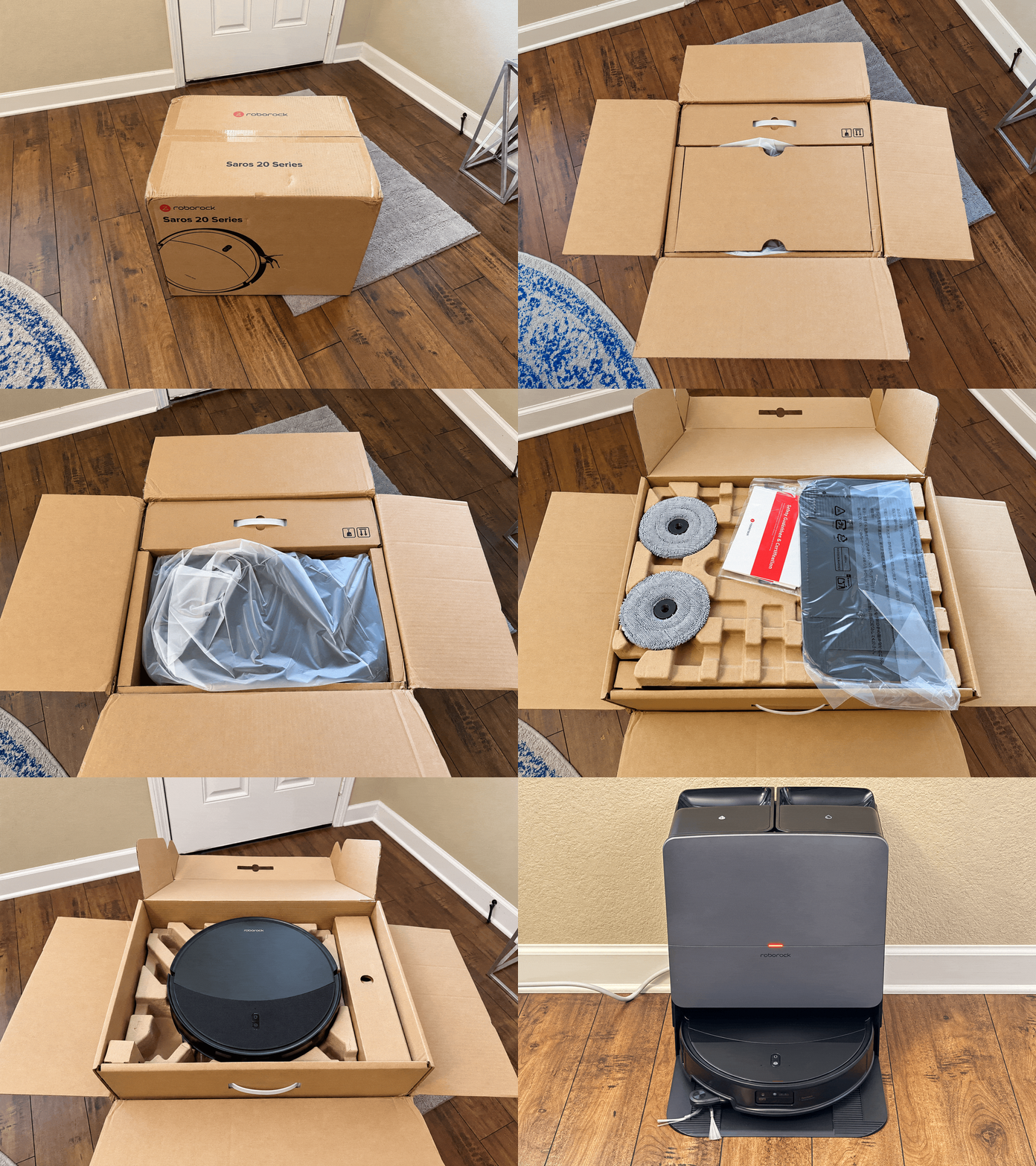
The standard package includes the Saros 20, multifunction dock and base, power cable, rotating mop holders, two mop pads, one dust bag and the user manual.
No extra brushes, filters, mop pads or other replacement accessories are included.
The front of the robot has also changed, replacing the Saros 10R's glossy finish with a textured matte look.
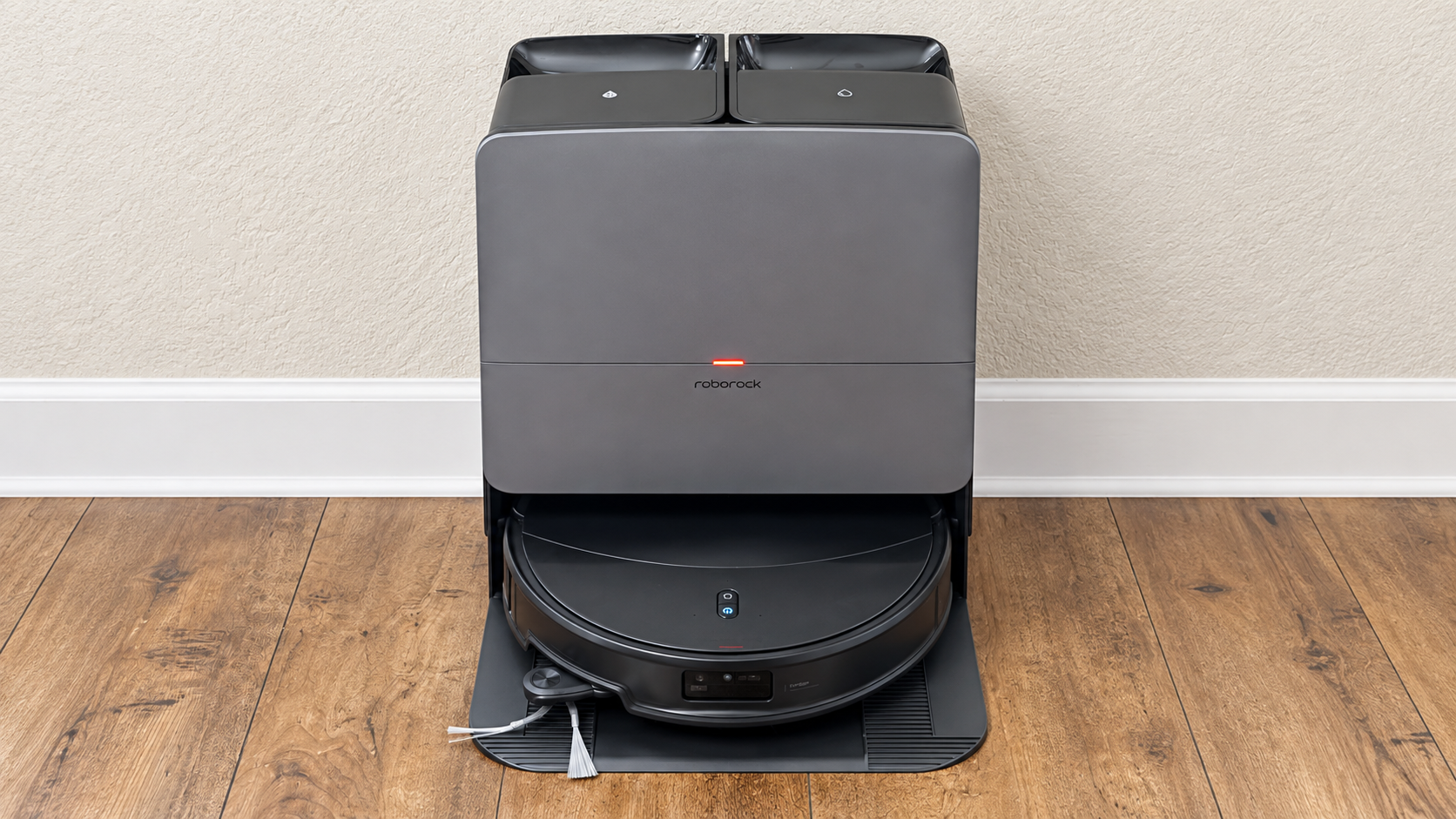
The dock keeps the familiar layout, with the clean- and dirty-water tanks accessible from the top and the robot docking beneath the station.
The washboard can also be removed for cleaning.
Setup and Mapping
After connecting the Saros 20 to the app, the initial mapping run took about 15 minutes and produced a detailed map of our home.
Automatic room identification was less successful, labeling our open-concept kitchen as a bathroom.
Fortunately, fixing it was easy. The app lets you rename rooms, adjust boundaries and divide or merge spaces with ease.
However, the app still offers plenty of control over cleaning settings, carpet handling, obstacle avoidance and room-specific routines without making the main options difficult to find.
Obstacle Avoidance Is Promising
Obstacle avoidance performed well during the initial cleaning runs on engineered hardwood flooring.
The Saros 20 successfully navigated around shoes, boxes, socks and several small toys without making contact or becoming overly cautious around them.
Performance was less consistent on carpet. The Saros 20 encountered a power cord that blended into the carpet and later ran over a sports drink lid that had fallen beneath our desk, sucking it into the main brush area and triggering an error.
Those early results suggest the Saros 20 handles larger, more visible objects well, while smaller or low-contrast items may be more difficult to detect, particularly on carpet.
Pickup Performance Is Mixed
Despite the increase in suction over the Saros 10R, pickup performance was unimpressive during the initial cleaning runs.
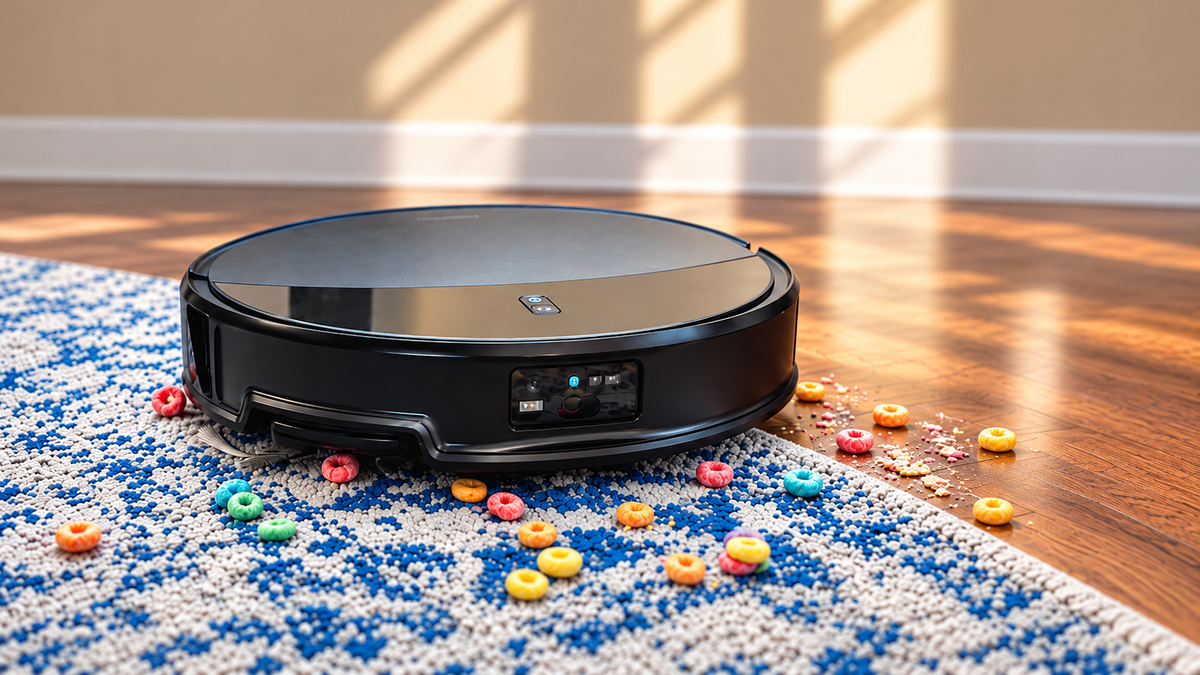
During one test, the Saros 20 had trouble collecting larger pieces of ring-shaped fruity cereal on both engineered hardwood flooring and carpet.
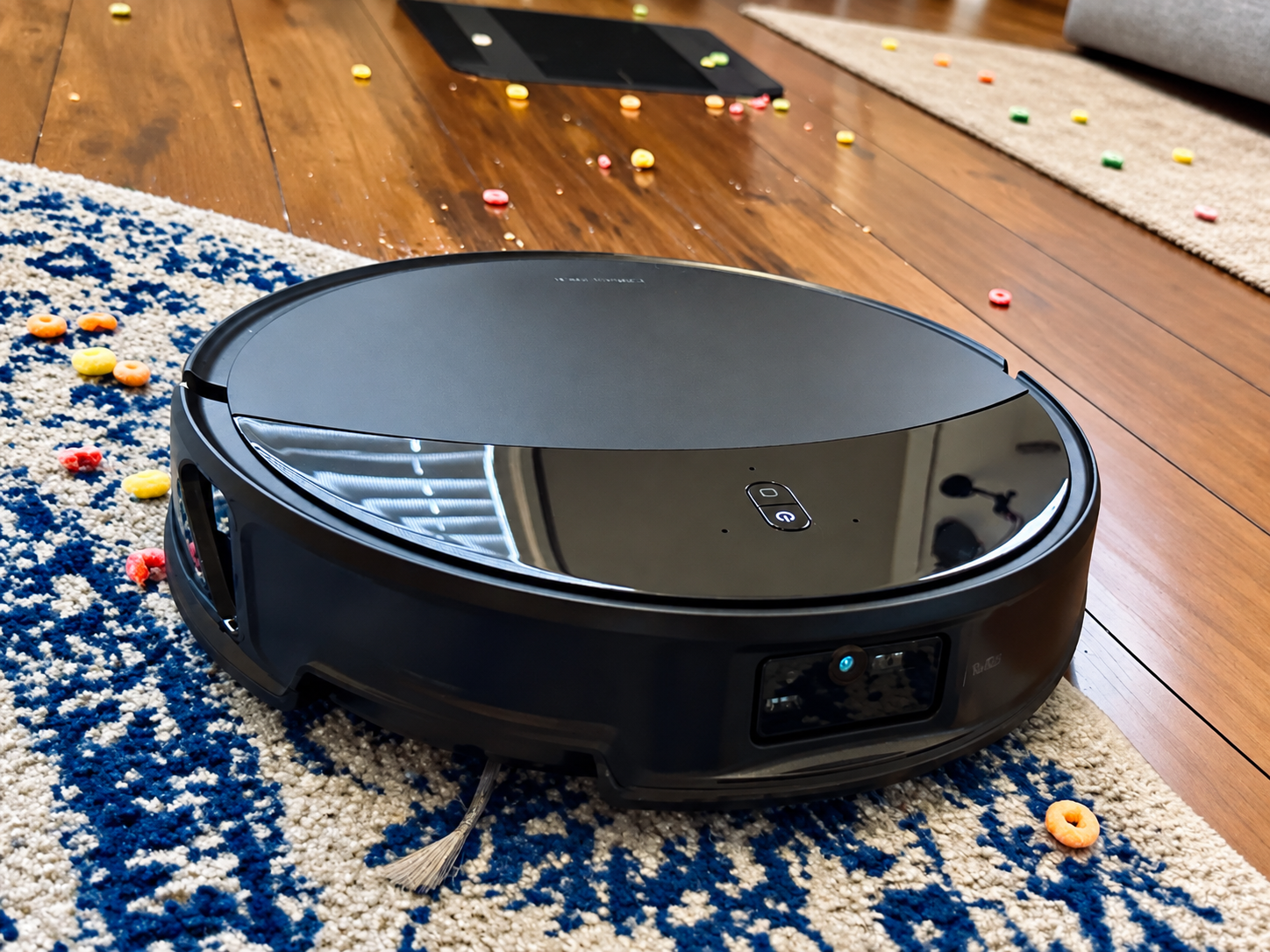
Instead of picking up the pieces whole, the robot rolled over some of them, crushing the cereal before collecting only part of the smaller debris.
It also left ordinary dust and dirt around the edges of our entry rugs.
The DuoDivide brush is designed primarily to reduce hair tangles, particularly in homes with shedding pets.
That design has its advantages, but it has not matched the pickup performance we've previously seen from the DuoRoller system on the S8 series.
Edge cleaning was also inconsistent.
Although the Saros 20 can extend its side brush toward walls and corners, it did not consistently do so during the initial runs and left some debris along baseboards.
Mopping Is Largely Unchanged
Like the Saros 10R, the Saros 20 made a stronger impression on mopping than vacuuming.
The Saros 20 had no trouble cleaning up a spilled fruit drink from our engineered hardwood flooring and returned for a second pass to make sure the area was fully cleaned.
The right mop can extend toward walls and baseboards for better edge coverage without riding up on our quarter-round molding, and both mop pads can be left behind at the dock when they are not needed.
Both features worked reliably during our initial runs.
Final Thoughts
These are still early observations, and our first cleaning runs relied largely on the Saros 20's updated SmartPlan settings.
There may still be room to improve vacuuming performance with stronger suction levels, custom routines, different cleaning modes and future firmware updates.
Over the next several months, we will see whether those changes can deliver more consistent pickup across carpet, rugs, tile and engineered hardwood flooring. More difficult stain testing will give us a better idea of its mopping performance as well.
We will also be watching how SmartPlan adapts, whether edge cleaning improves and how the Saros 20 holds up over time, including dock performance, maintenance and overall reliability.
That should give us a much clearer picture of how the Saros 20 compares with Roborock's other recent flagships, especially the Saros 10R.
Price and Availability
The Roborock Saros 20 has a U.S. suggested retail price of $1,599.99 and is now available through the company's online store, Amazon and other retailers.
The Saros 10R has also dropped from $1,599.99 to $999.99, giving buyers a less expensive option that may be almost as good for many homes.