
Same Chinese Manufacturer Receives Second FCC Robot Vacuum Approval Despite Restrictions
The same Chinese manufacturer has received FCC authorization for a second robot vacuum despite new restrictions on foreign-produced advanced robotic devices.

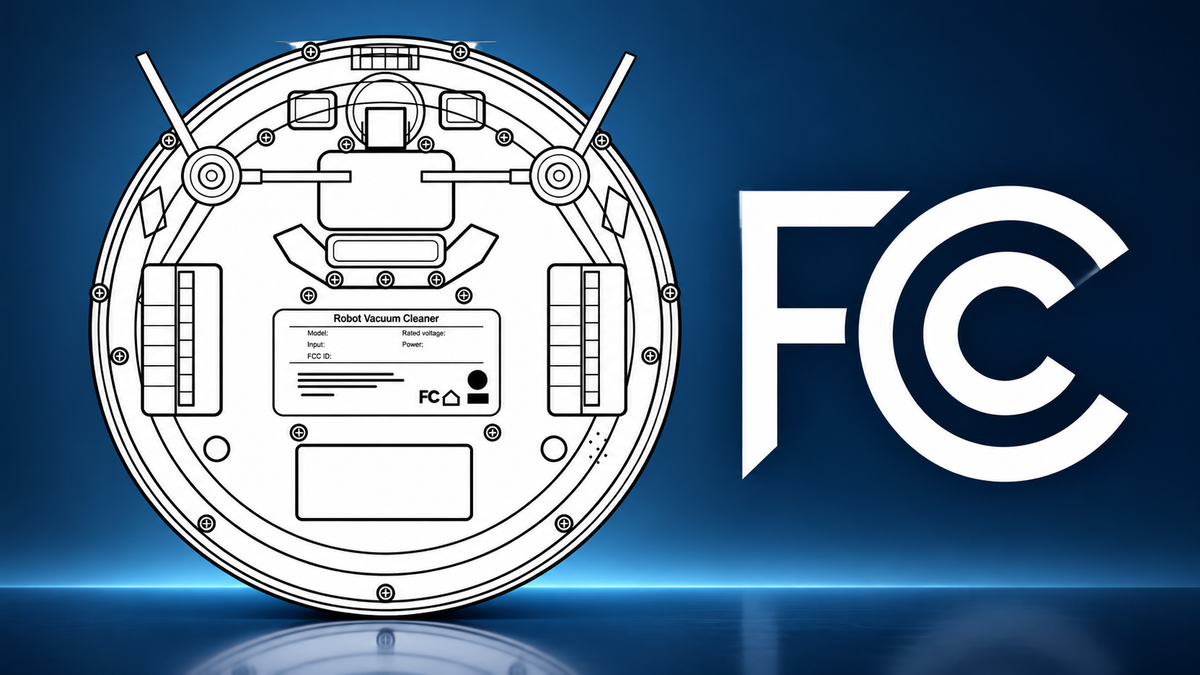
A Chinese manufacturer has received federal authorization for a second robot vacuum in less than a month, raising questions about how its products qualify under new restrictions on foreign-produced robots.
The Federal Communications Commission granted approval Nov. 3 to Guangdong Shunde PLDK Intelligent Technology Co. Ltd., based in Foshan, China, for model RVC-PK001.
The new authorization, FCC ID 2BX4LRVC-PK001, follows the company's Oct. 9 approval for another robot vacuum, RVC-PK004, also identified as SD204.
VacuBots previously reported on the SD204, which received authorization after the FCC introduced restrictions on foreign-produced advanced robotic devices July 28.
What the New Filing Reveals
The RVC-PK001 application was submitted Oct. 23 and approved Nov. 3 through IIA Lab Services LLC.
The robot supports 2.4 GHz Wi-Fi and Bluetooth Low Energy connectivity. Its photographs and user manual remain confidential until May 2, 2027, leaving its design, navigation system and weight unknown.
No retail brand, U.S. price or launch date has been identified.
Why Are These Robots Being Approved?
The FCC's July 28 restrictions limit new authorizations for foreign-produced advanced robotic devices meeting certain criteria, including autonomous navigation, environmental sensing, network connectivity and a combined weight exceeding 4.4 pounds, including a docking station when applicable.
Devices that do not meet all applicable criteria may fall outside the restrictions, while others can receive conditional exemptions.
Neither filing explains why Guangdong Shunde PLDK's robots qualify. Their weight could be a factor, but the available documents do not establish whether either model falls below the threshold.
No separate conditional approval for the manufacturer has been publicly identified.
What This Means
FCC authorization is an important step toward selling wireless electronics in the United States, but it does not confirm a retail launch or establish compliance with every applicable regulation.
The two approvals do not indicate that the FCC has relaxed its restrictions. However, they show that the same Chinese manufacturer has secured separate robot vacuum authorizations since the rules took effect.
Until additional technical information becomes public or the FCC clarifies the basis for the approvals, it remains unclear why these devices are eligible.
Clarify the 4.4-pound ruleTighten the approval timelineStrengthen the reader takeaway