New FCC Rules Could Leave U.S. Robot Vacuums and Lawn Mowers Behind
New FCC rules may not push robot vacuums and lawn mowers out of U.S. stores, but they could eventually leave American buyers with older hardware than consumers overseas.


This is an editorial. The views and opinions expressed are those of the writer and reflect an interpretation of available FCC actions and industry developments.
New FCC restrictions may not cause robot vacuums or robotic lawn mowers to disappear from U.S. stores, but they could eventually leave American buyers with older technology than consumers in other markets.
That is one of the implications of a new forecast from International Data Corp., which expects household cleaning robots to hold up relatively well in the short term despite restrictions on new equipment authorizations for certain foreign-made advanced robotic devices.
IDC projects U.S. household cleaning robot shipments will be about 4% below its previous forecast in 2027, with the difference growing to 18% by 2030.
Robotic lawn mowers were not the focus of IDC's forecast, but they face many of the same regulatory pressures. Like robot vacuums, modern mowers increasingly depend on wireless connectivity, cameras, lidar, radar and other electronic systems that can require FCC authorization.
The relatively small early impact comes down to products that have already cleared the FCC.
Previously authorized robots can continue to be manufactured and sold. The new rules primarily become a problem when a company needs FCC approval for a substantially different product.
That gives established robot vacuum and mower brands a catalog of hardware they may be able to continue using in the United States.
New Models May Rely on Familiar Foundations
IDC expects robot vacuum companies to keep older certifications useful by making incremental changes rather than immediately replacing entire product generations.
That could include revised designs, software features and certain minor hardware changes while retaining enough of an existing platform to avoid seeking a completely new authorization.
For consumers, that may not initially be obvious.
A future U.S. robot vacuum could have a different appearance, updated software and revised cleaning hardware while still tracing much of its underlying design back to a robot approved before the new restrictions.
The same strategy could apply to robotic lawn mowers.
Manufacturers could continue updating blade types, software and exterior designs while relying on previously authorized navigation, connectivity and control hardware.
Robot Vacuum Innovation Could Test That Strategy
Robot vacuum technology is changing quickly.
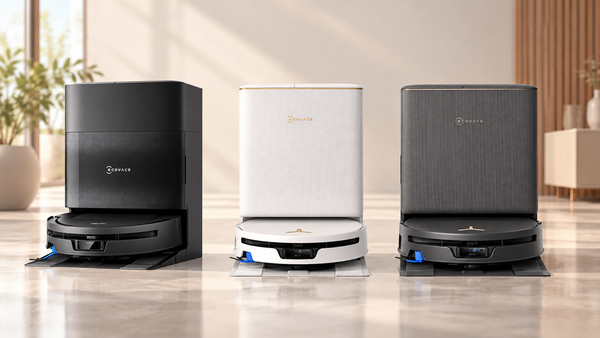
Recent premium models have introduced roller mops, retractable lidar, lifting chassis, robotic arms, upgraded obstacle avoidance systems and more elaborate docks.
Those are more significant changes than the annual increases in suction or software features that once defined many model updates.
If newer designs require fresh FCC approval, U.S. lineups could begin diverging from products sold overseas.
A company could continue selling older-generation robot vacuums in the United States while reserving its newest technology for Europe, China and other markets.
IDC believes the robot vacuum industry could remain competitive through at least 2027 by extending existing generations.
That timeline may prove accurate, but competitive and cutting-edge don't necessarily mean the same thing.
Robotic Lawn Mowers Are Changing Just as Fast
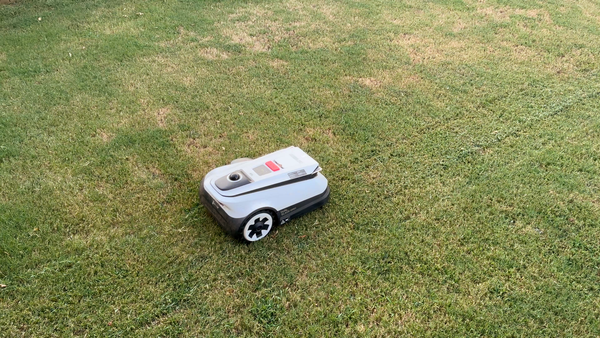
Robotic lawn mowers are undergoing their own rapid transformation.
The category has moved away from perimeter wires toward RTK, lidar, cameras and combinations of multiple navigation technologies.
New models are also adding all-wheel drive, active steering, more advanced obstacle recognition and new edge-cutting systems, including extendable trimming hardware.
That could make it harder for manufacturers to keep relying on older platforms.
A mower sold in the United States could retain an older navigation system while a newer overseas model adds a redesigned lidar setup or edge-cutting system.
Software Can Only Go So Far
Software updates could help manufacturers keep existing platforms competitive.
Better obstacle recognition, navigation algorithms, app features and cleaning logic can all improve a robot without requiring an entirely new physical design.
Artificial intelligence also gives companies more opportunities to improve existing hardware over time.
But software cannot add a camera that is not there, change a lidar system's field of view or turn a two-wheel-drive mower into an all-wheel-drive platform.
Eventually, hardware matters.
But What About Husqvarna?
Under the FCC's framework, products with Conditional Approval are exempt from the Covered List for as long as that approval remains in effect.
On Sept. 9, the agency granted Conditional Approval to four of Husqvarna's robotic mower platforms after a national security review, allowing the 305v IQ, 310v IQ, 420v IQ and 440v IQ to remain off the FCC's Covered List.
That shows the restrictions do not automatically block every new robotic mower from entering the United States. Manufacturers can still seek review of individual products.
But a deeper look at Husqvarna’s case raises another question.
The company is Swedish, has a long-established U.S. presence and deep commercial ties across the country, including professional and government customers.
It is unclear how much those factors contributed to Husqvarna receiving a Conditional Approval with no expiration date.
It's also unclear whether other robotic mower manufacturers will have the same path available to them.
The Bigger Risk Is What Comes Next
IDC's forecast suggests the immediate effect of the FCC rules may be limited for robot vacuum buyers.
The same could be true for robotic lawn mowers.
Stores can continue carrying authorized products, and companies have room to update existing designs. The FCC has also shown that certain robotic mower platforms can clear a national security review.
Whether that same path is realistically available to less-connected manufacturers remains an open question.
The larger question is what happens once those platforms are no longer competitive.
If manufacturers cannot bring substantially new generations through the authorization process, the United States may continue receiving new robots without receiving the industry's newest technology at the same pace.
The result would not necessarily be empty robot vacuum or robotic mower aisles.
It could instead be a growing technology gap between the robots sold in the United States and those available everywhere else.