
Gardena Sileno Sun Robot Mower Runs Entirely on Solar Power
Gardena’s new Sileno Sun robotic mower runs on solar power without a charging dock, power cable or boundary wire and uses Bluetooth for app connectivity.

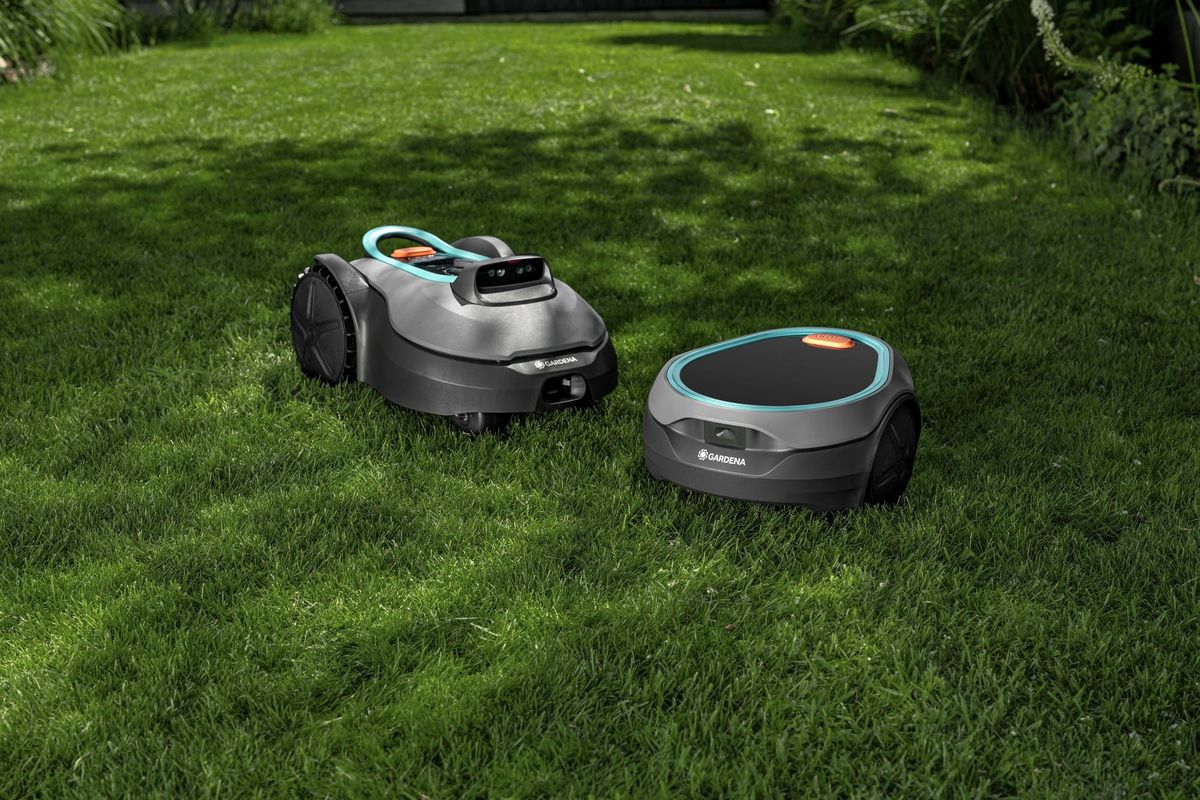
Gardena has introduced the Sileno Sun, a new robotic lawn mower that recharges itself through an integrated solar panel.
The mower is part of Gardena’s 2027 lineup and is designed for smaller, simpler lawns.
No Charging Dock or Power Cable
The Sileno Sun stays on the lawn and recharges from solar energy and daylight instead of returning to a powered base. Gardena says it requires no charging station, power cable or installation.
The mower uses Bluetooth rather than Wi-Fi for app connectivity. Basic controls are available directly on the mower, while the optional Gardena Bluetooth app handles settings such as no-mow times and battery status.
Daylight is required for operation. Gardena has not disclosed the battery capacity or solar panel output, leaving questions about how cloudy weather or heavy shade could affect charging.
The Sileno Sun is rated for lawns up to 1,100 square feet and slopes up to 15 percent. Gardena rates operating noise at 57 decibels, roughly comparable to a normal conversation.
Camera Navigation Replaces Boundary Wires
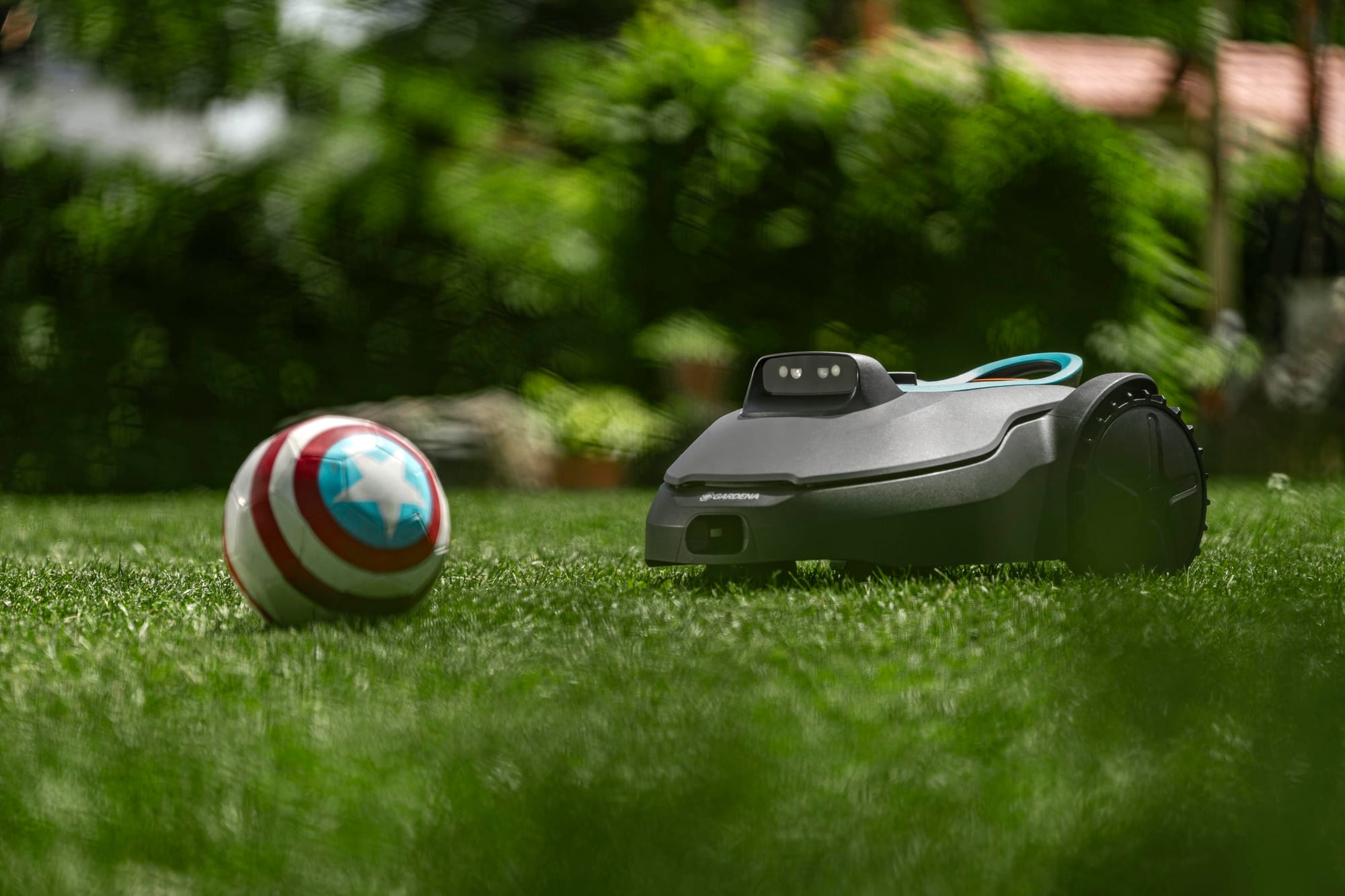
A built-in camera and vision-based AI allow the Sileno Sun to recognize visible lawn edges without a buried perimeter wire.
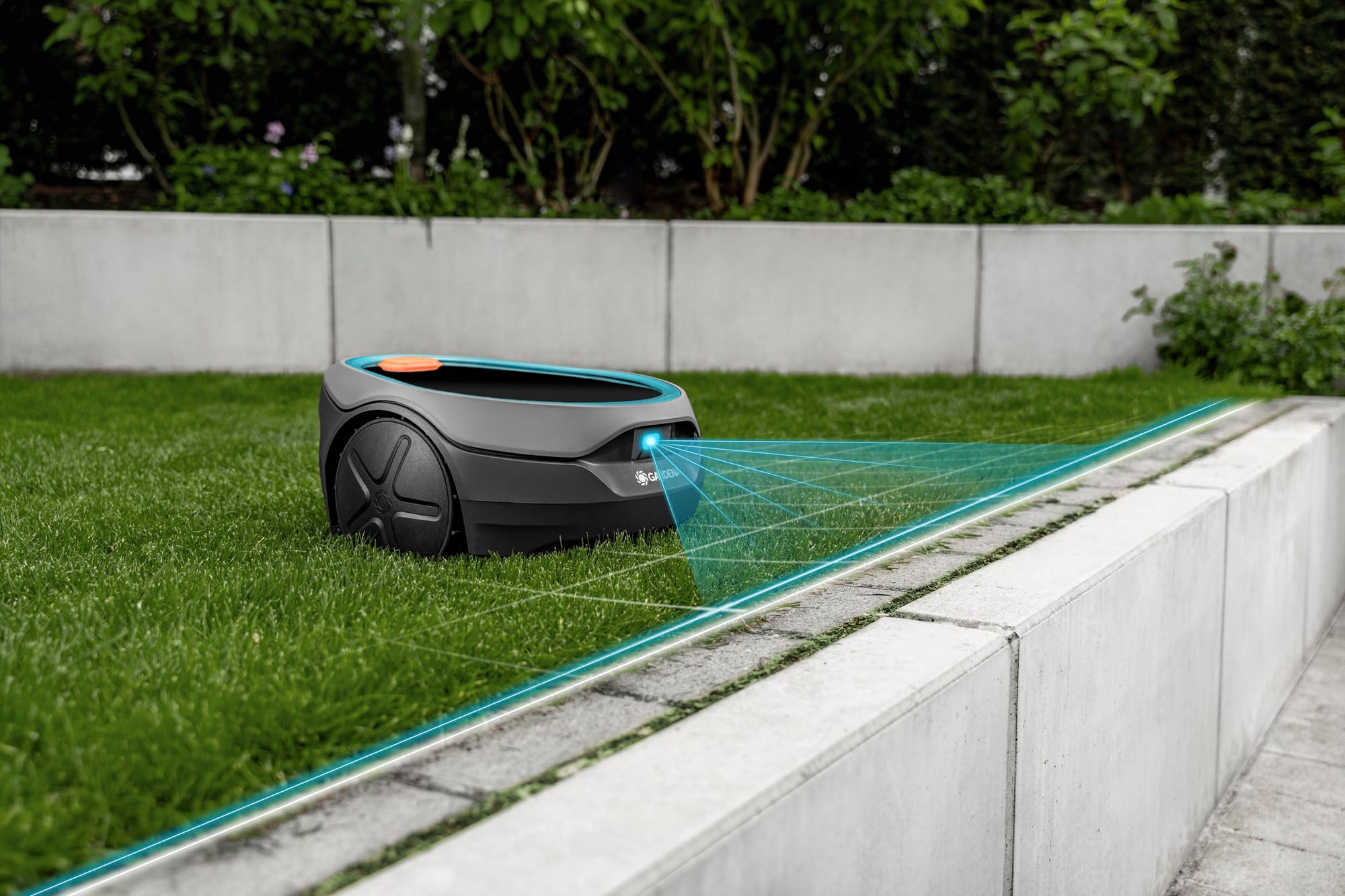
That gives it a simpler setup than many current wire-free mowers that rely on RTK antennas, reference stations, lidar mapping or other external positioning hardware.
Sileno Evolve Targets Larger Lawns
Gardena also introduced the Sileno Evolve for larger and more complex yards.
The Evolve uses three cameras and VSLAM to create a 3D map of the lawn without perimeter wires, antennas or external beacons. It can handle slopes up to 35 percent and supports straight-line mowing, rain detection and dynamic starting points.
Unlike the Sileno Sun, the Evolve uses a conventional charging station and requires Wi-Fi with an internet connection for app-connected features. Gardena plans versions for lawns up to 6,500 and 10,800 square feet.
Daylight is also required for the Evolve’s camera-based navigation.
Pricing and Availability
Gardena has not announced pricing or a specific launch date for either mower.
Both are planned for 2027, and U.S. availability has not been announced.